Sleep Improved: Firefighter Sleep and Shift Start Time Study
A data-driven evaluation by Dr. Joel Billings and Dr. Joe Pennino, presented at NERDSTOCK 2025
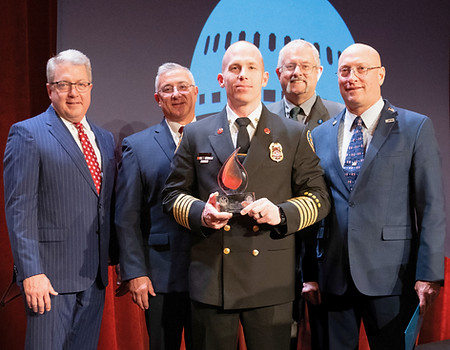
Award Recognition: The Roswell Fire Department was awarded the 2025 Senator Paul S. Sarbanes Fire Service Safety Leadership Award for this research, which was recognized nationally for studying how shift schedules and adjusted start times affect firefighter performance, sleep quality, and long-term health.
Abstract: This study evaluates firefighter sleep, wellness, and operational readiness under different shift start times and duty schedules at the Roswell Fire Department, a suburban Atlanta agency serving approximately 95,000 residents and responding to roughly 10,000 calls annually. The study compares the 24/48 and 48/96 scheduling models and examines how delaying shift start times affects sleep offset, recovery, circadian alignment, and fatigue. Data were collected using wearable sleep trackers, daily questionnaires, and baseline and follow-up surveys from 43 consenting participants. Results show measurable improvements in sleep duration, morning readiness, and family well-being when shift timing is optimized.
Study Overview: This project examines how shift start times influence firefighter sleep behavior, recovery, and overall wellness at the Roswell Fire Department. The evaluation compares the traditional 24/48 schedule with the increasingly adopted 48/96 model, with specific attention to how a later shift start time affects sleep quality and operational readiness.
The study was conducted in partnership with Dr. Joel Billings, Program Chair for the Bachelor of Science in Emergency Services at Embry-Riddle Aeronautical University, whose prior published research on firefighter sleep provided the scientific framework for this applied evaluation.
Data collection ran from June 2024 through November 2025 and included four phases: baseline assessment, 2-month acute sleep follow-up, 12-month chronic measures, and annual medical evaluations. Instruments included wearable actigraphy devices, daily sleep and fatigue logs, and validated questionnaire measures tracking sleep quality, sleepiness, stress, workload, job satisfaction, and mood.
Participants: 43 Roswell firefighters consented to participate. 33 completed the baseline assessment and 14 completed the full follow-up protocol. The spouse/partner survey included 32 respondents and was administered in April 2025 following the transition to the 48/96 schedule.
Key Findings
Sleep Duration: Overall mean sleep time improved from 6.7 hours under the 24/48 schedule to 7.0 hours under 48/96. Home sleep improved from 6.9 to 7.2 hours. Commute-day sleep improved from 6.3 to 6.8 hours. Sleep on work nights remained consistent at approximately 6.5–6.6 hours across both schedules.
Morning Readiness: Under the 24/48 schedule, firefighters reported feeling tired upon waking on work mornings and commute mornings. Under the 48/96 schedule, firefighters reported feeling rested upon waking on both work-shift mornings—a notable shift in how personnel arrive for duty.
Fatigue and Stress: Fatigue scores trended downward on the second work day under 48/96 (from 17.7 to 15.1), suggesting improved recovery across the extended shift. Stress and anxiety scores were generally lower or comparable across the tour under the new schedule.
Sleep Pattern: The 48/96 schedule produced a more normalized sleep pattern. Pre-tour sleep improved by approximately one hour, and firefighters consistently arrived for duty well-rested without signs of poor alertness.
Spouse and Partner Survey (32 Respondents -- April 2025)
-
90% of spouses report satisfaction with the new schedule
-
84% believe their partner's mental health improved
-
78% report greater help at home
-
72% note stronger emotional availability and connection
-
70%+ report partners are more mentally and physically present when off duty
-
63% observed improved sleep and restfulness in their partner
The most commonly cited concern was the 11 AM shift start time, which some spouses noted limits family time on transition days.
Methodology: The Sleep Improved study used a mixed-methods longitudinal design. Wearable actigraphy devices captured objective sleep data, including total sleep time (TST), time in bed (TIB), sleep efficiency (EFF), wake after sleep onset (WASO), sleep onset latency, and number of awakenings. Daily questionnaires tracked call burden, sleepiness, fatigue, mood, stress, and workload. Baseline and follow-up questionnaires assessed sleep quality, insomnia, anxiety, depression, job satisfaction, and general health. The study compared outcomes across the 24/48 and 48/96 schedules, controlling for commute days and pre-tour nights to isolate the effect of schedule and start time on sleep behavior.
Dr. Joe Pennino
Email: pennino.joe@gmail.com
LinkedIn: https://www.linkedin.com/in/drjoepennino/
Dr. Joel Billings
Program Chair, Embry-Riddle Aeronautical University
Email: Joel.billings@erau.edu